Judge 3.0
Modernizing the IT systems of Poland's common courts — a concept for the Ministry of Justice
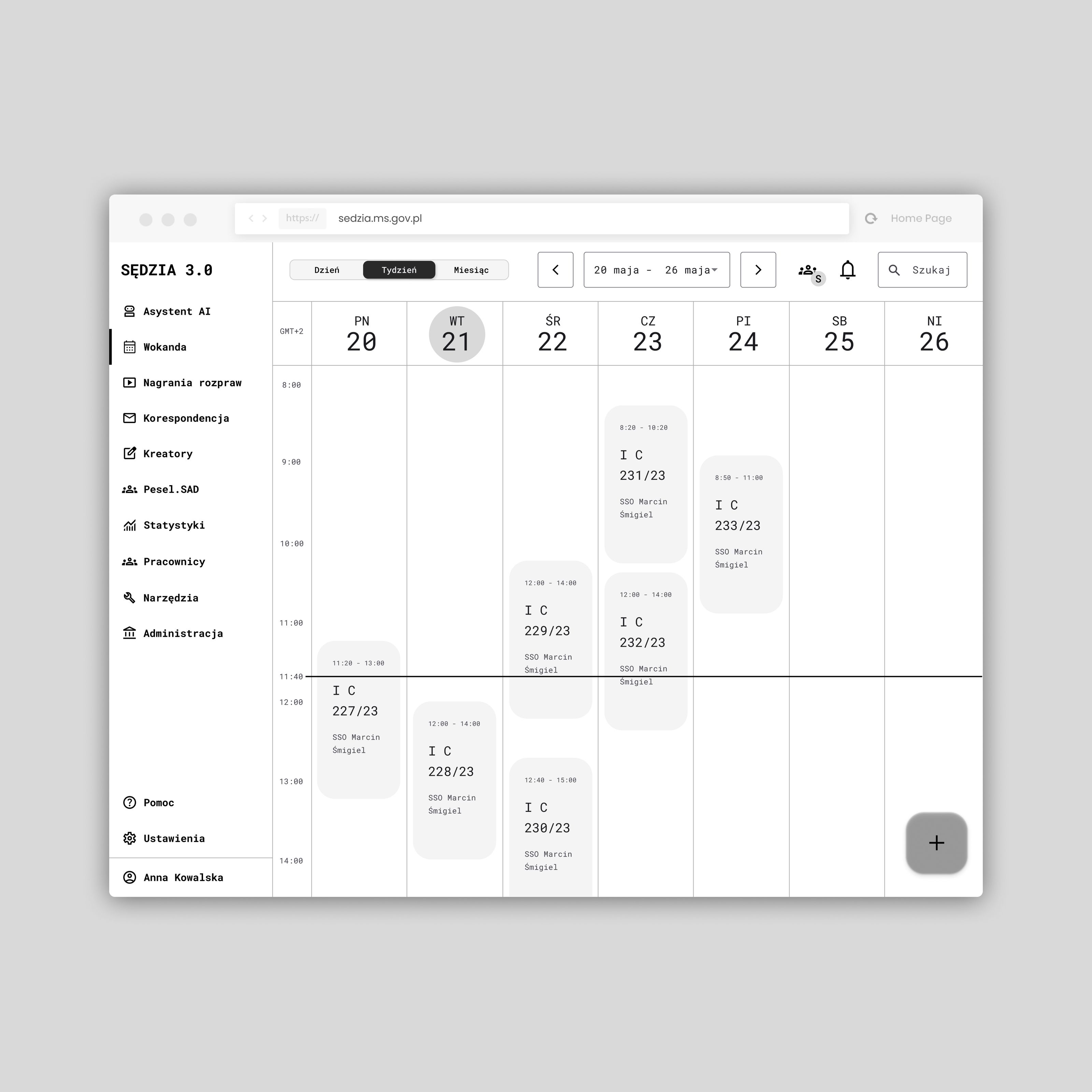
The main challenge was translating a highly complex, multi-stage court reality into clear, intuitive interfaces that also meet rigorous legal and security requirements. I had to reconcile different user profiles (judges, assistants, court reporters, referendaries) and their very different workflows, and plan a full digitization of case files while ensuring mobile access and AI support. The short discovery window forced fast iteration: from mapping the pain points of the existing system, through ideation workshops, to low-level mockups that had to convince decision-makers that modernization could genuinely shorten proceedings and relieve administrative staff.
Audit of the existing system
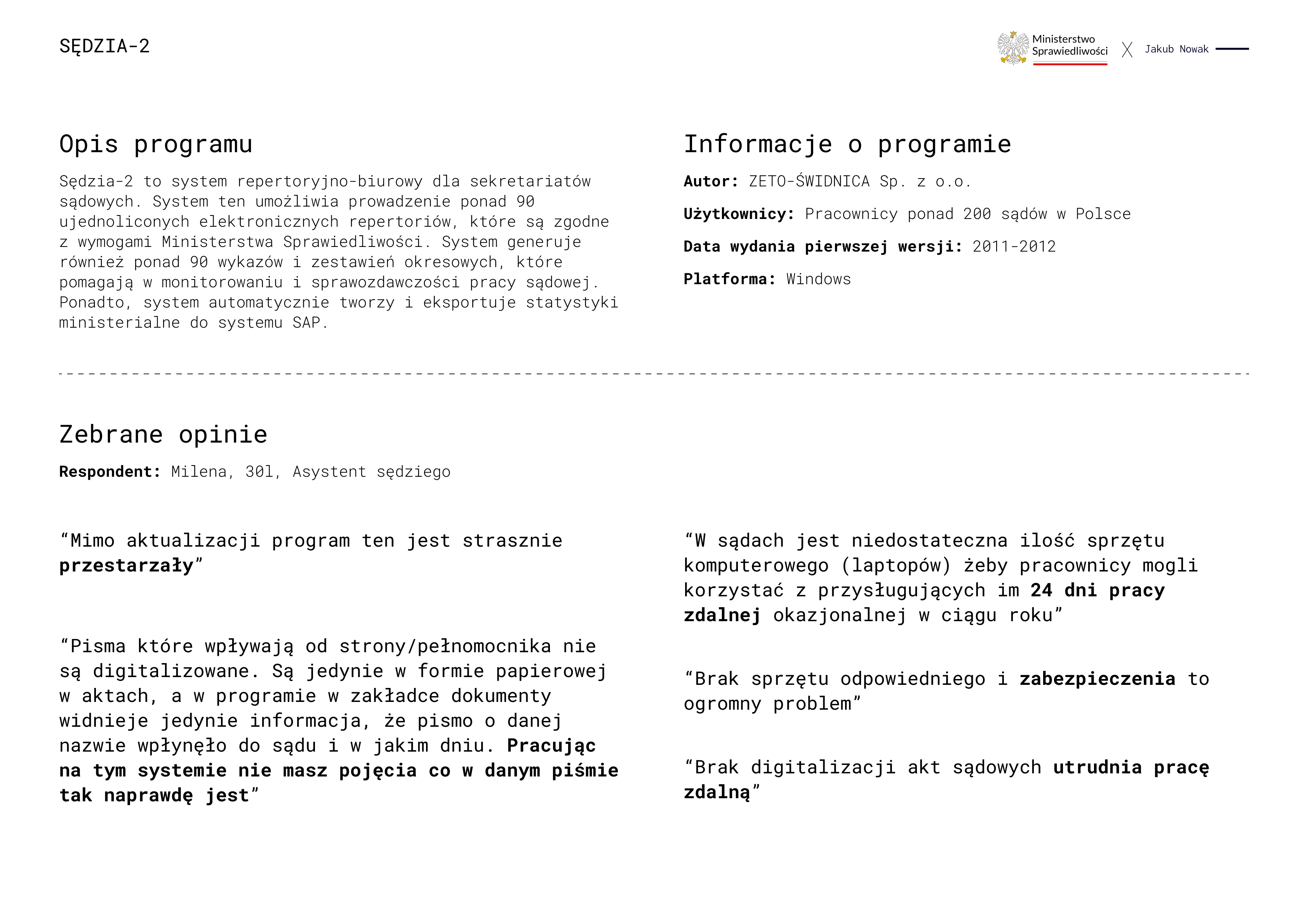
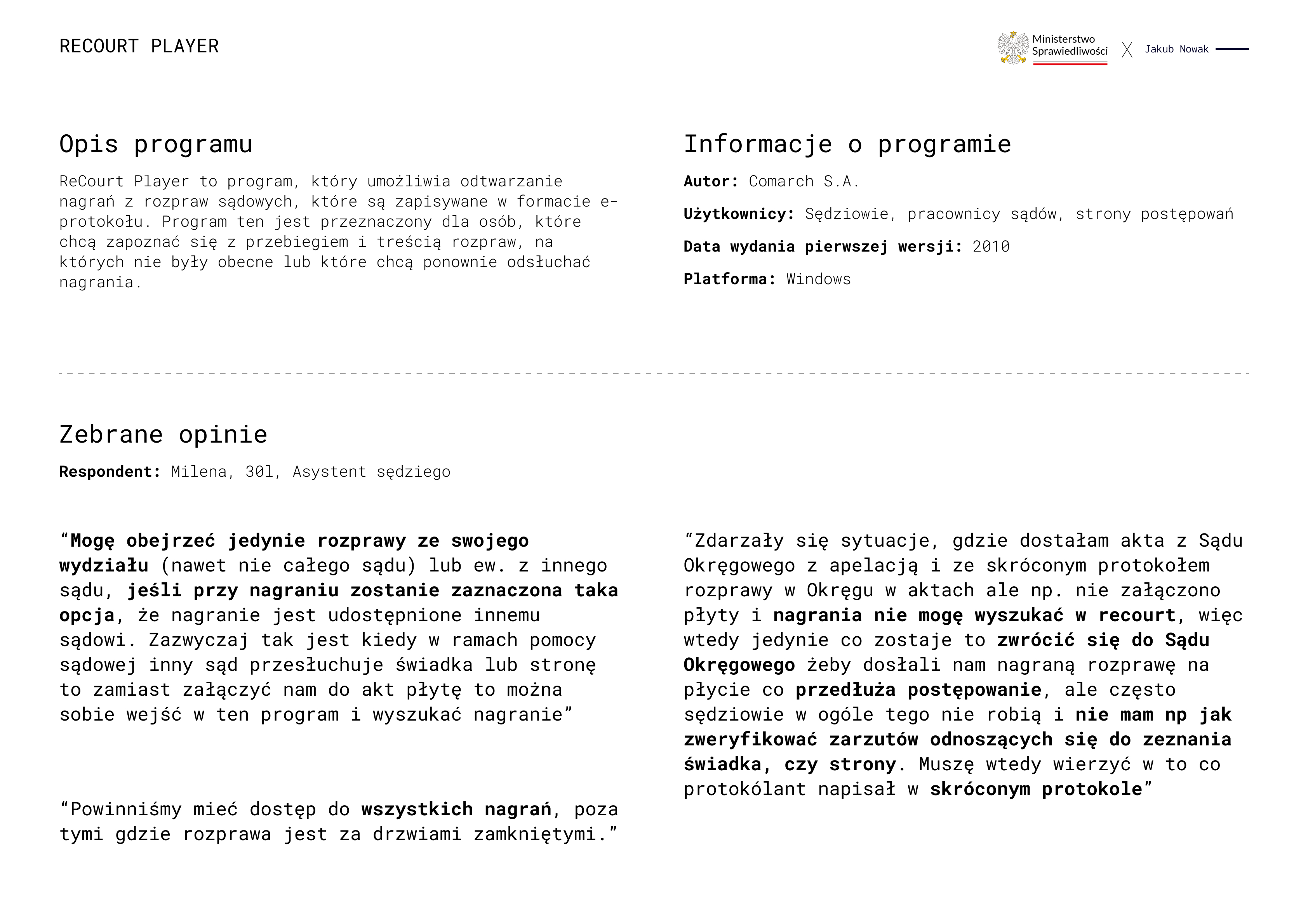
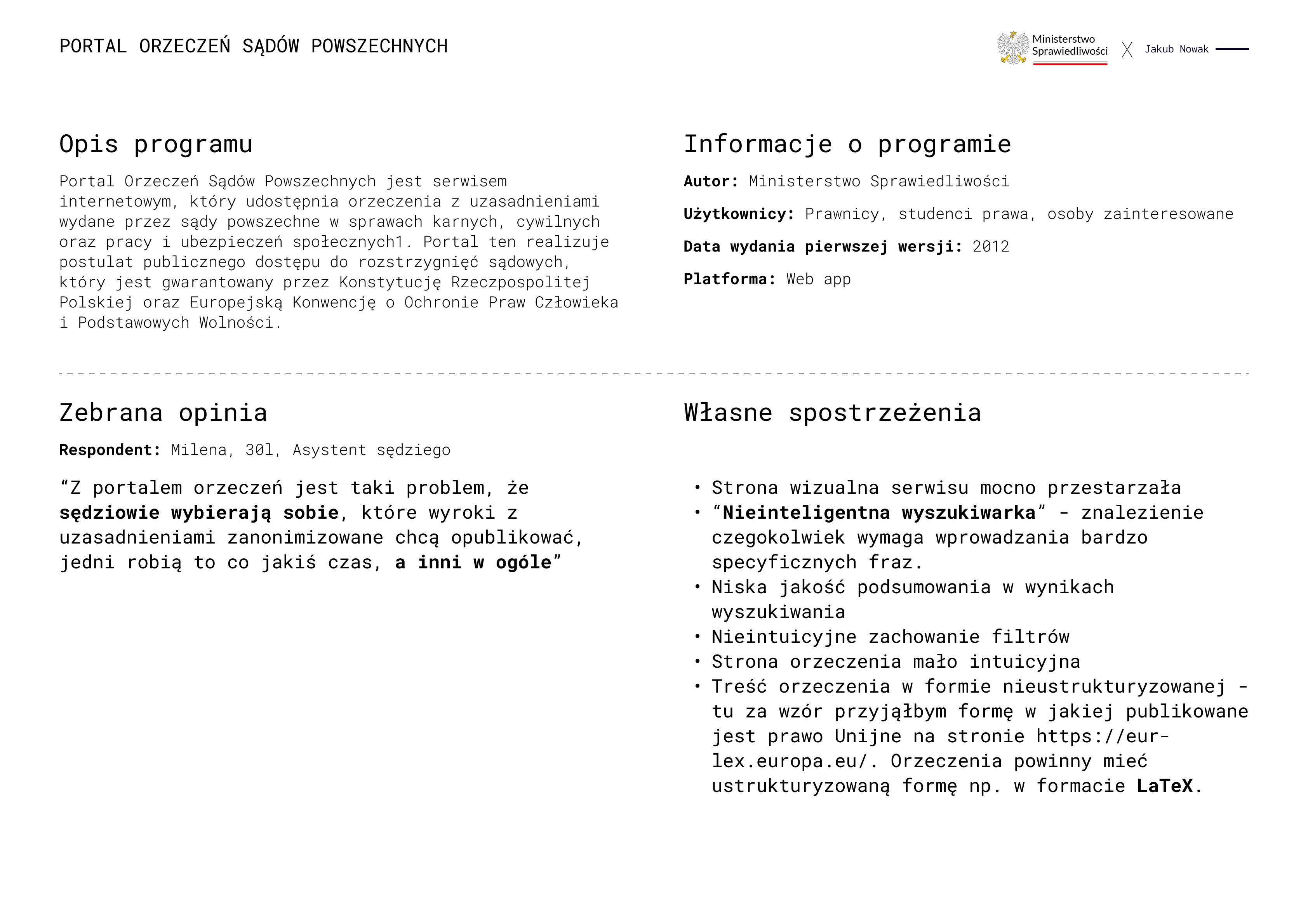
The project began with an in-depth analysis of the SĘDZIA-2 system and its companion tools: ReCourt Player (hearing recordings) and the Common Courts Rulings Portal. I identified the key friction points: an archaic interface with nothing in common with modern usability standards, no integration between tools, a complete lack of a mobile version, and risky procedures for managing physical files.
User research
I conducted in-depth interviews with court staff — judges' assistants, court reporters and referendaries — across several district and regional courts. Key finding: users lose up to 40% of their working time manually re-typing data between systems, and the lack of a mobile version means judges cannot work with case files outside the courthouse.
Information architecture — the new system
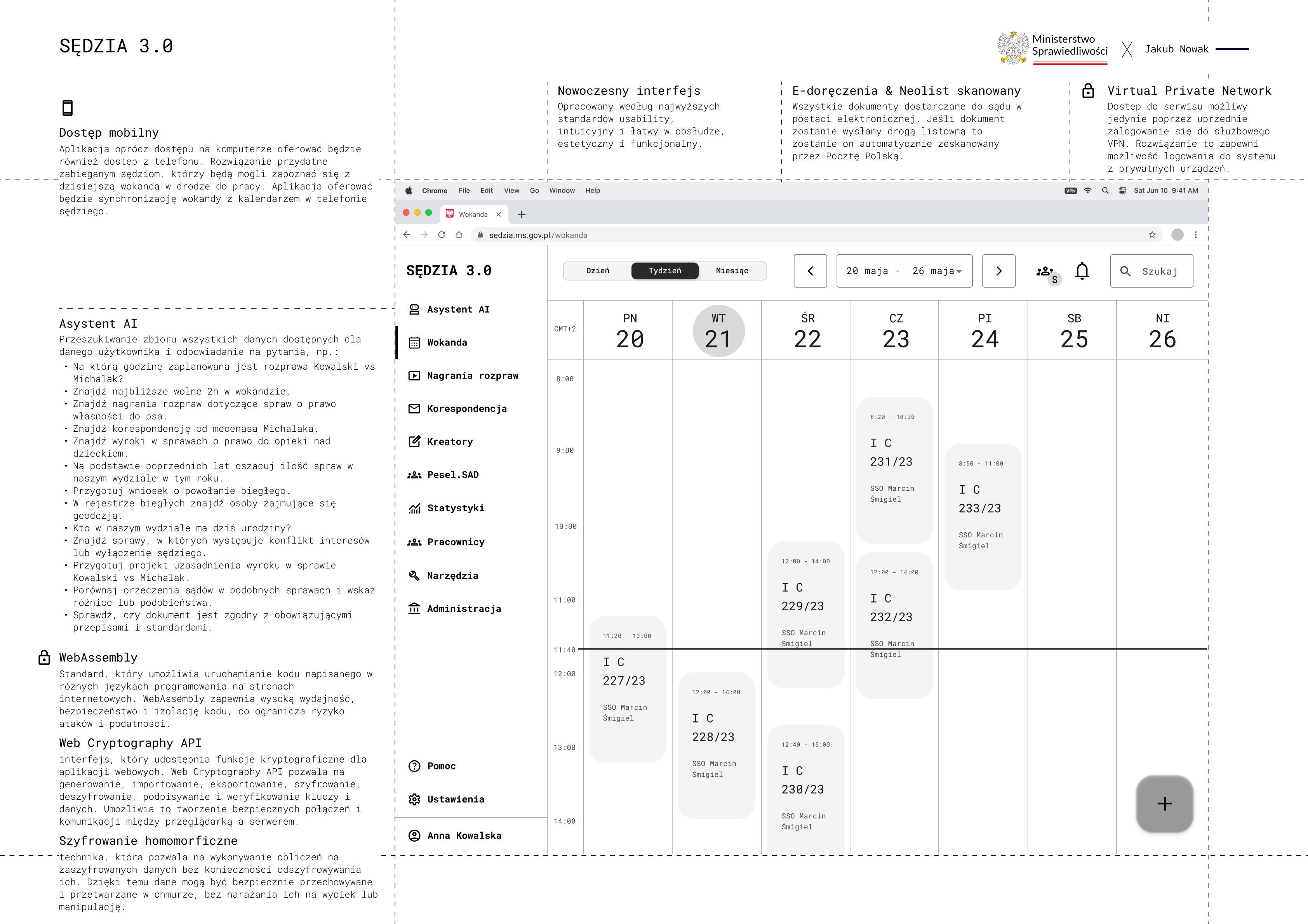
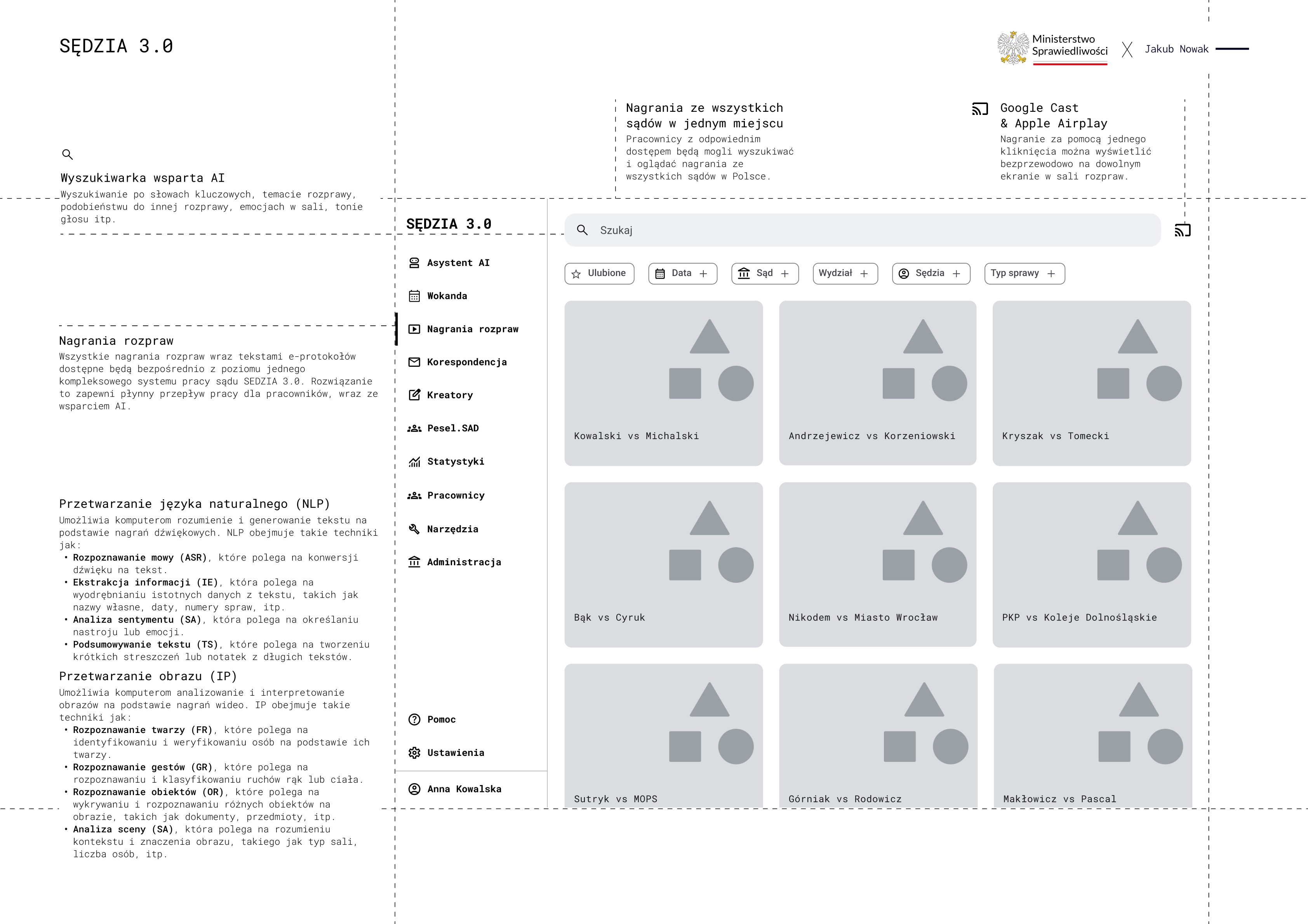
Based on the data gathered, I designed a new information architecture for SĘDZIA 3.0. Key principles: a single central hub for all cases assigned to a person, smart notifications integrated with e-delivery, and a built-in AI module supporting minute-taking and case-law search.
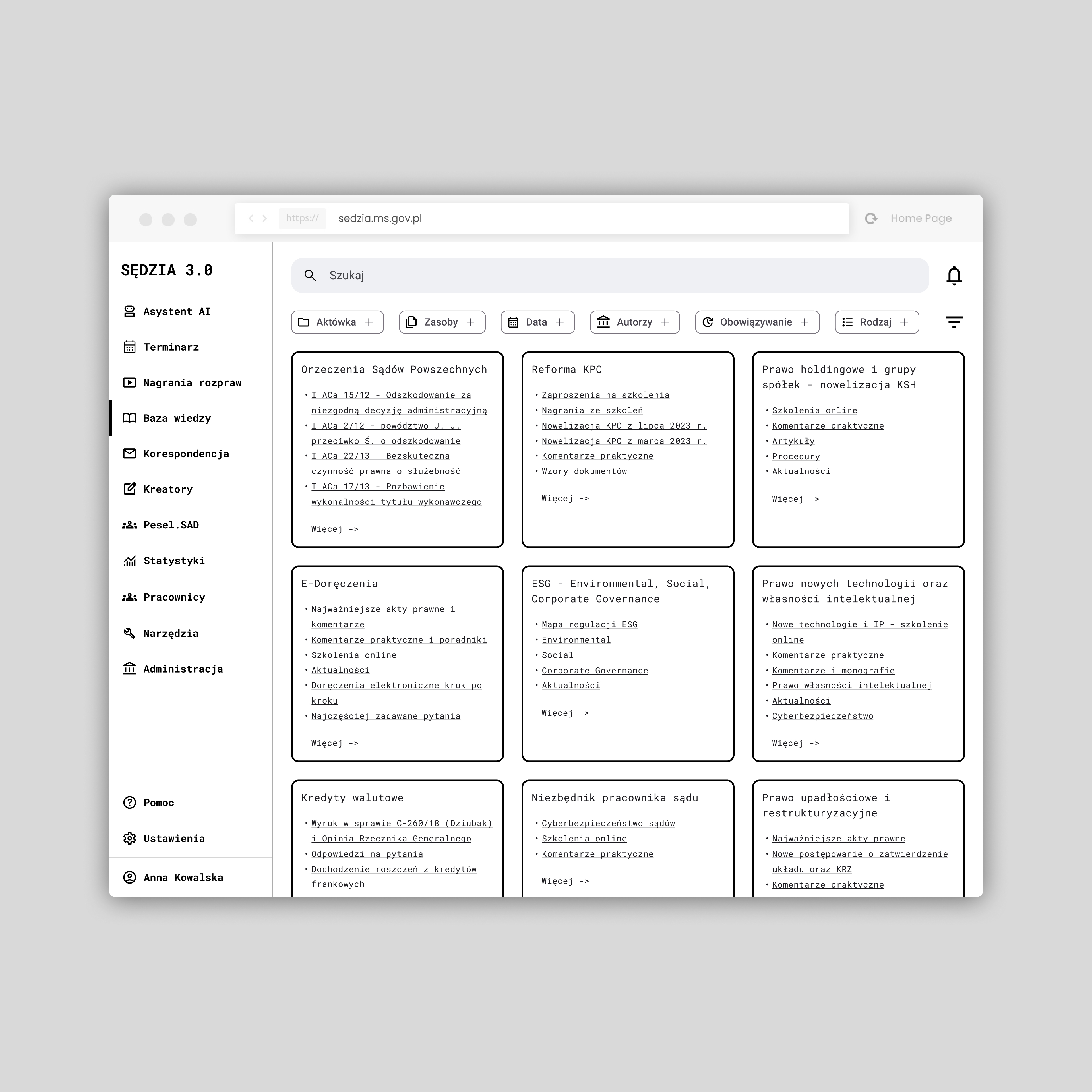
Interface design — the judge's dashboard
At the heart of the new system is a personalized judge's dashboard that shows the hearing schedule, cases requiring action and e-delivery notifications on a single screen. The interface is responsive and available on tablets, allowing judges to work with case files outside the courtroom for the first time.
Case management module
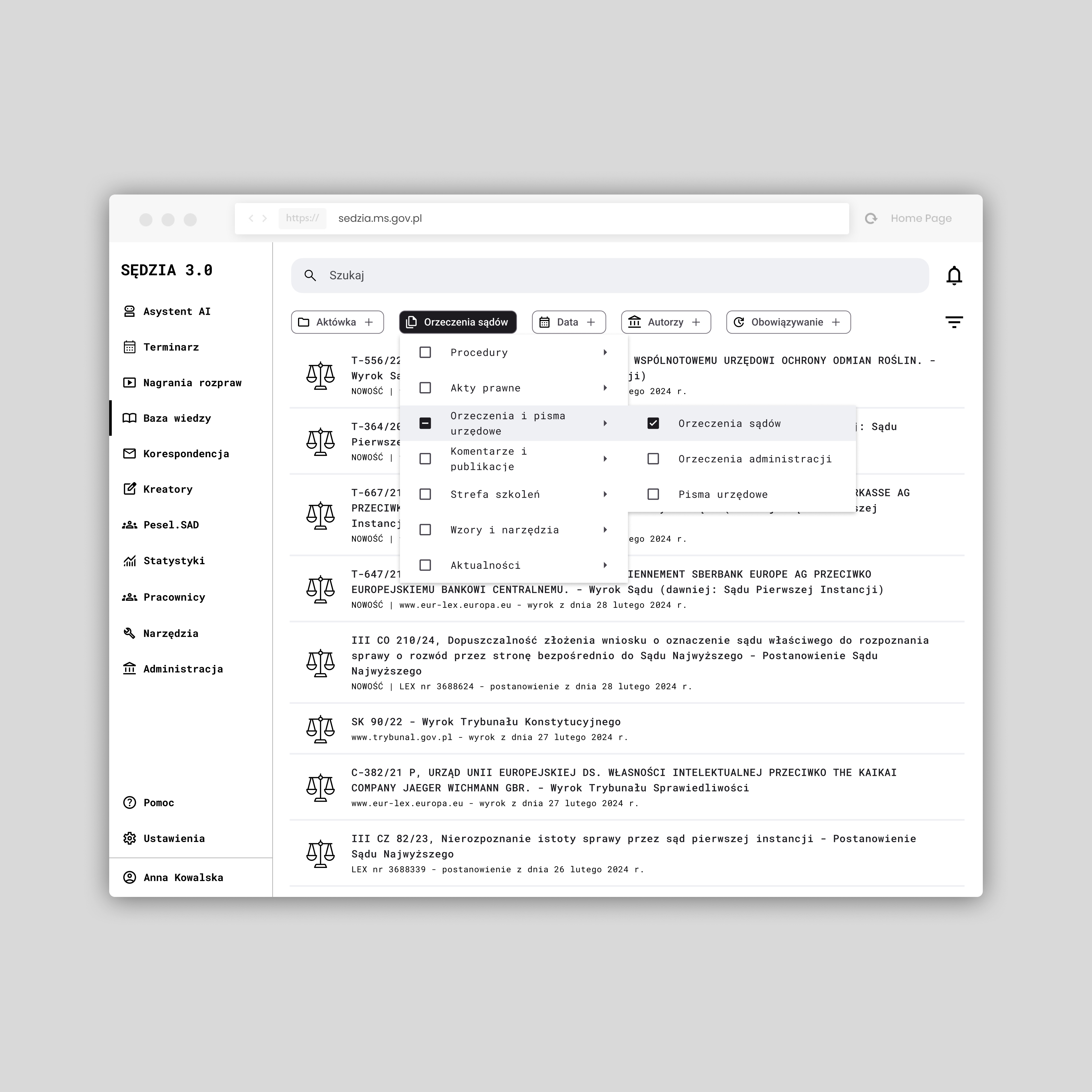
The new case-file module brings together all documents, hearing recordings (with automatic AI transcription), party motions and the schedule in one place. The system suggests the next procedural steps and automatically drafts documents based on earlier rulings in similar cases.
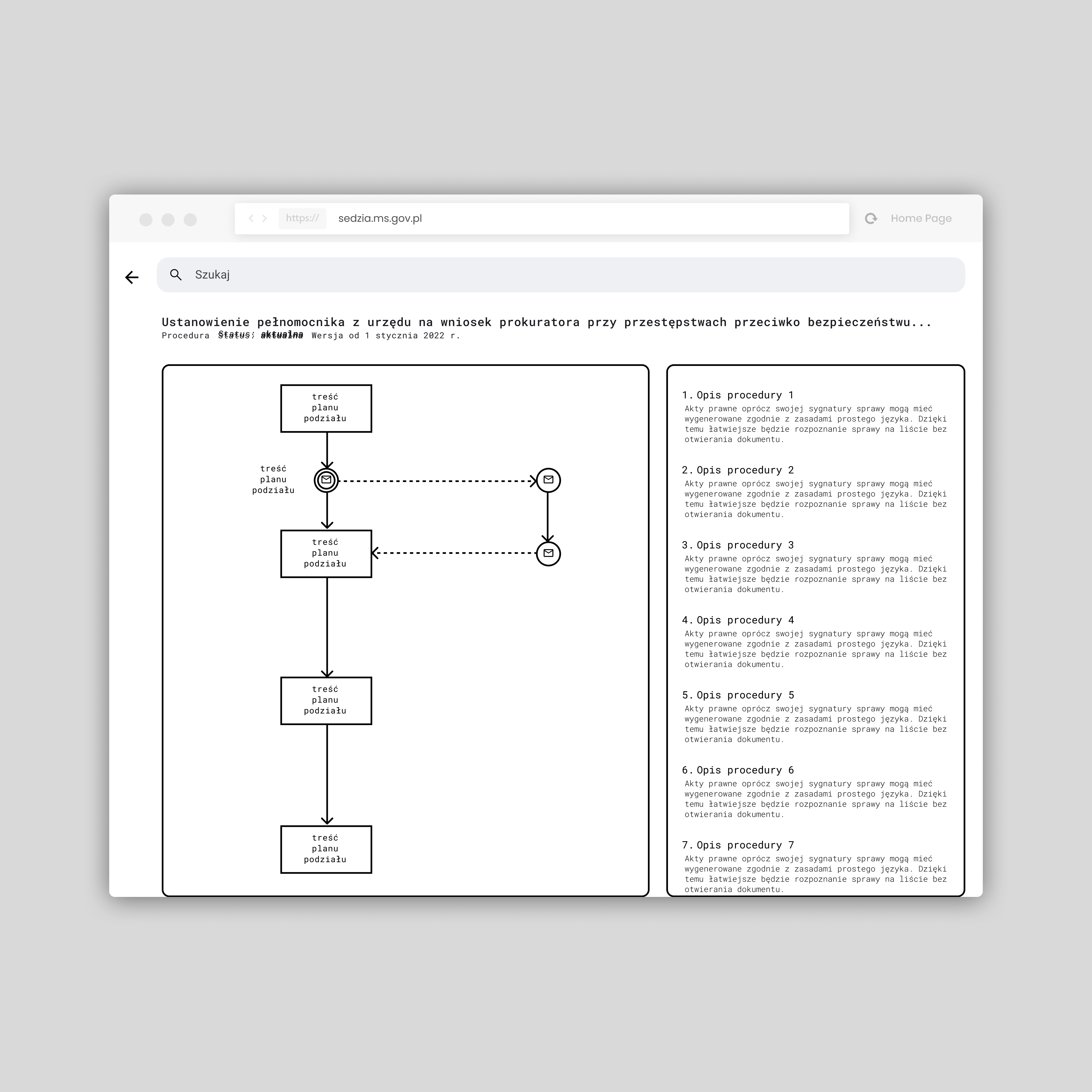
High-fidelity mockups — screen overview
The final visual mockups of SĘDZIA 3.0 cover a complete set of screens for all four user profiles. Below are the key views that emerged from the interviews as the most needed and the most painful in the previous system.
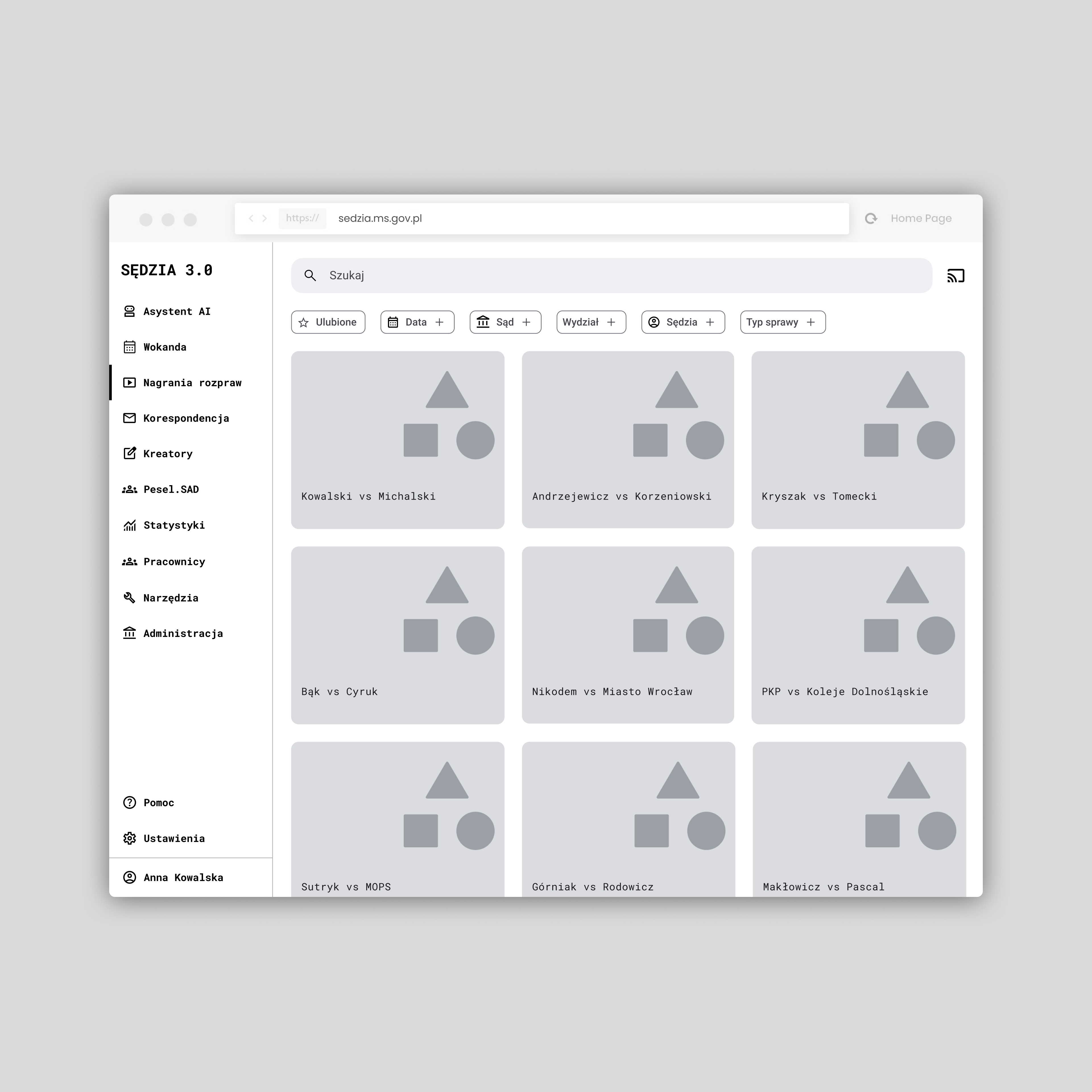
Case list view
The new case-list view replaces SĘDZIA-2's tabular listings with a dynamic, filterable overview featuring instant full-text search across files, parties and rulings. Each case has a visual status and priority indicator.
AI-assisted minute-taking
One of the system's key modules is AI-assisted hearing minutes. The system automatically transcribes participants' statements, identifies speakers and drafts the minutes. The court reporter only verifies the key points, cutting minute-taking time by an estimated 60–70%.
E-delivery & communication
Integration with the government e-delivery system lets users send and receive procedural documents directly from the system, with a full history and delivery confirmations. No more printing, physical stamping or tracking registered mail.
Results & recommendations
The SĘDZIA 3.0 concept was presented to representatives of the Ministry of Justice as a ready starting point for a system-modernization tender. It showed that, with the right UX approach, case-handling time could be cut by 30–40% while maintaining full compliance with legal requirements and personal-data security standards.
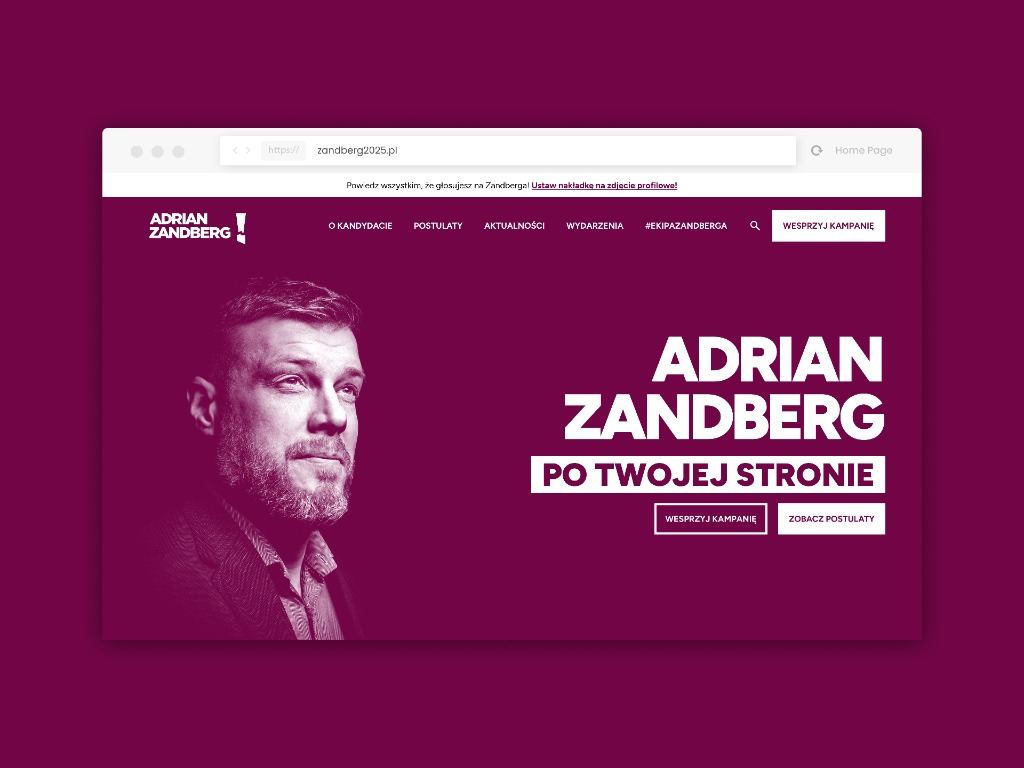
zandberg2025.pl
Adrian Zandberg's presidential campaign
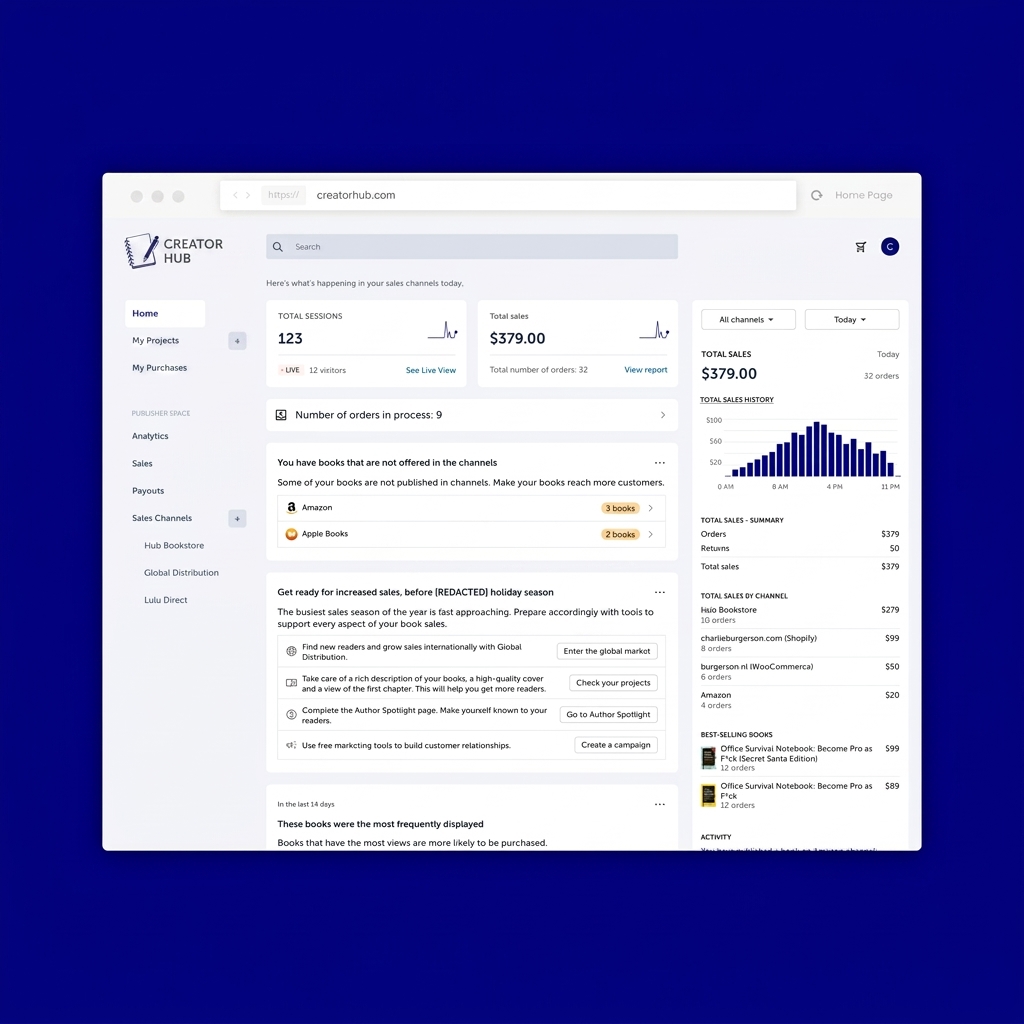
SaaS panel for a self-publishing platform
Redesign of a comprehensive content- and sales-management panel for creators.
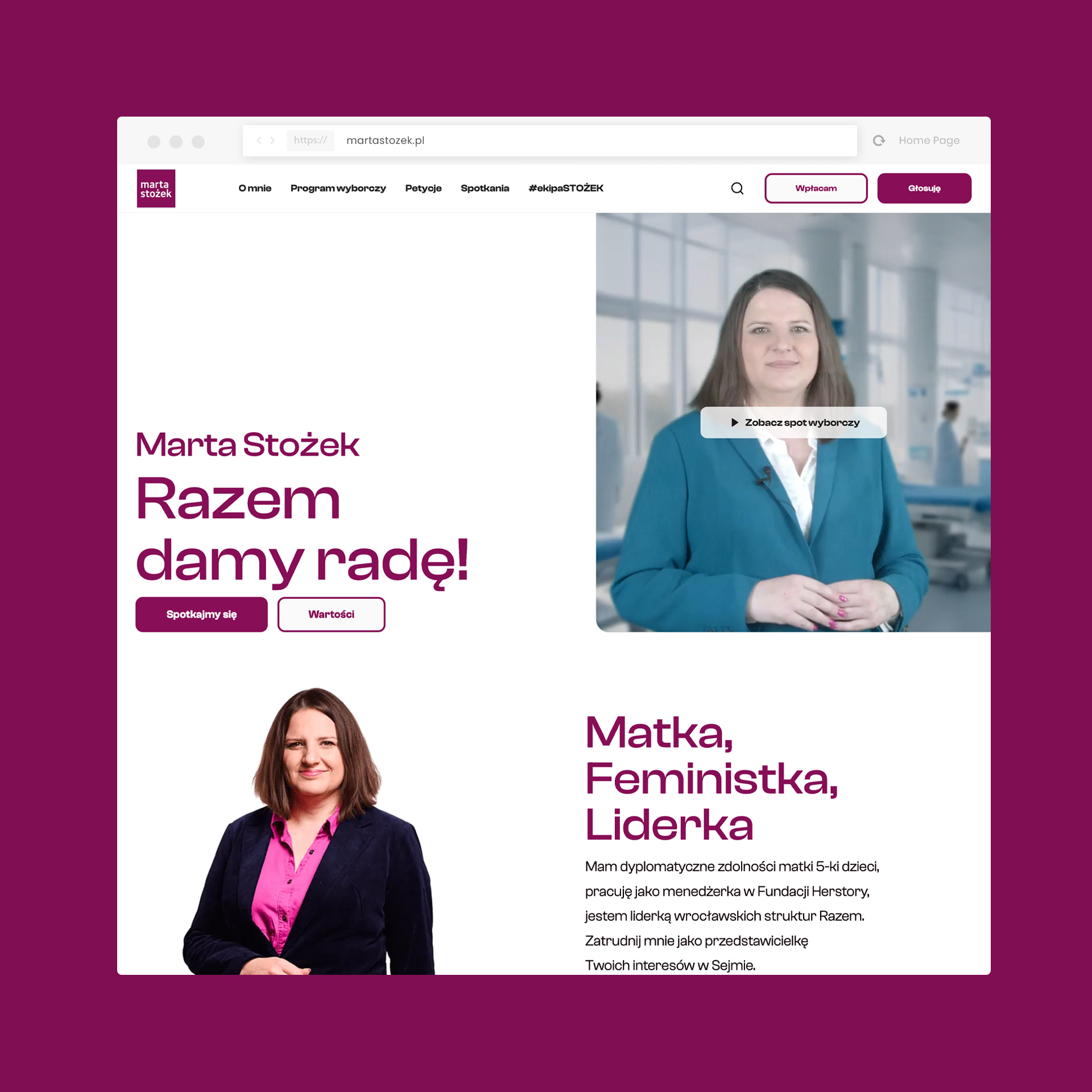
Marta Stożek
Election campaign: from strategy to execution
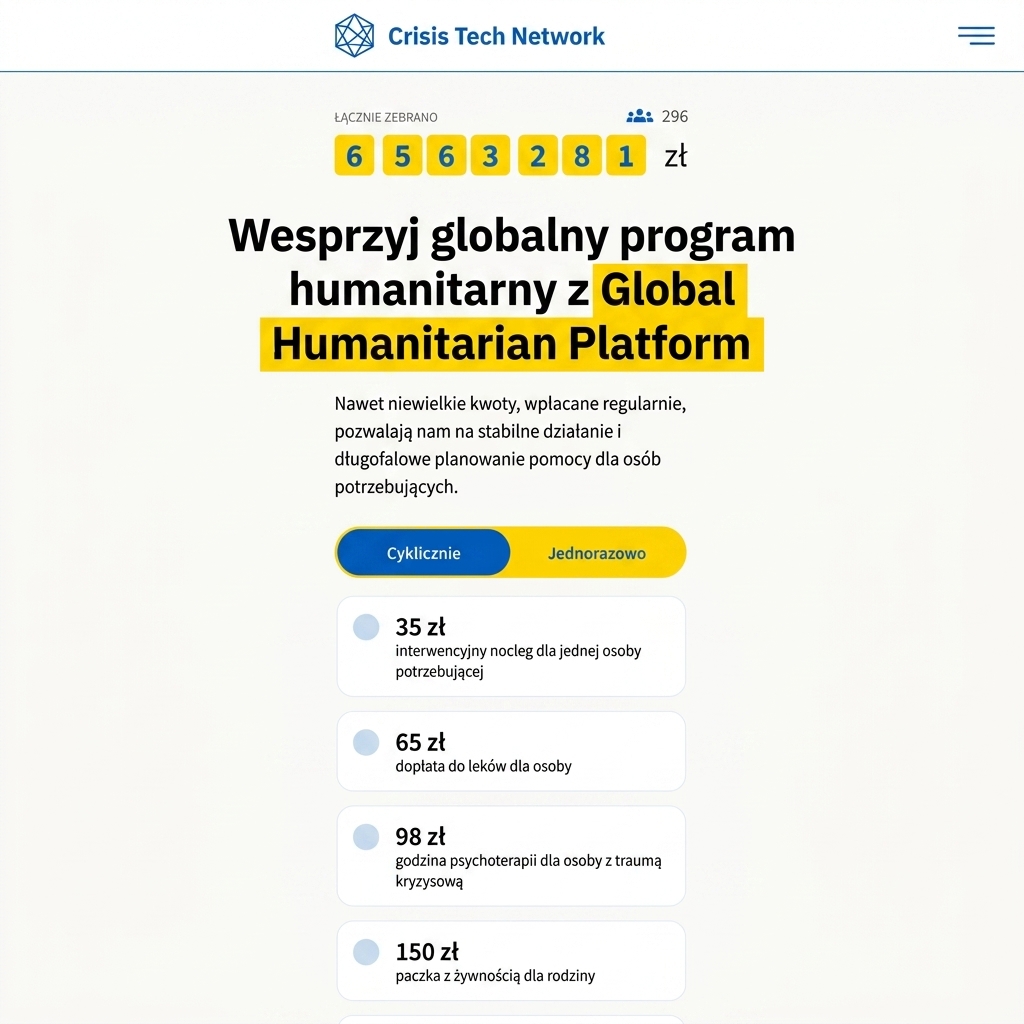
Global Humanitarian Platform
An NGO support project
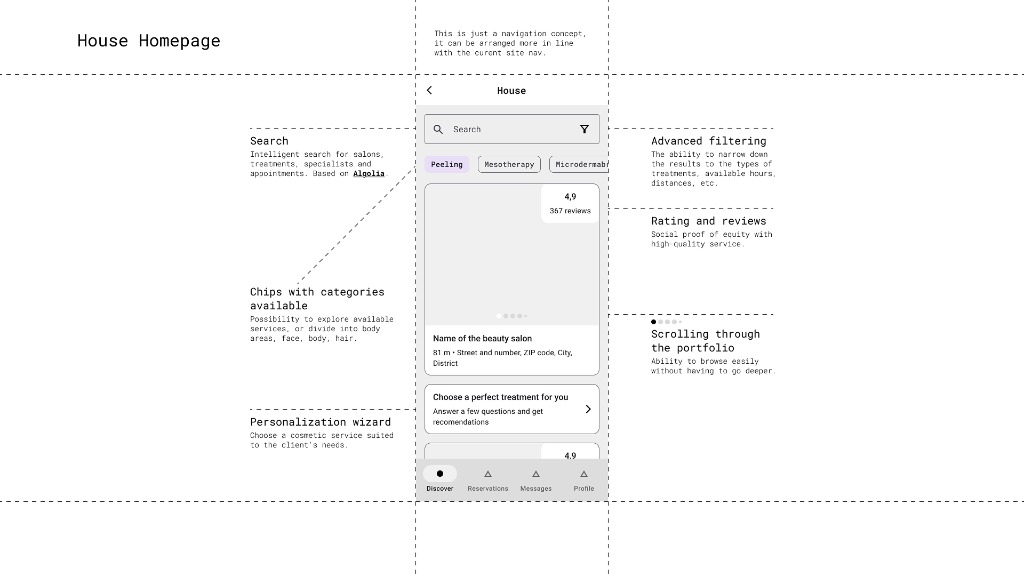
Global Beauty Brand
Salon-service UX concept — protected access
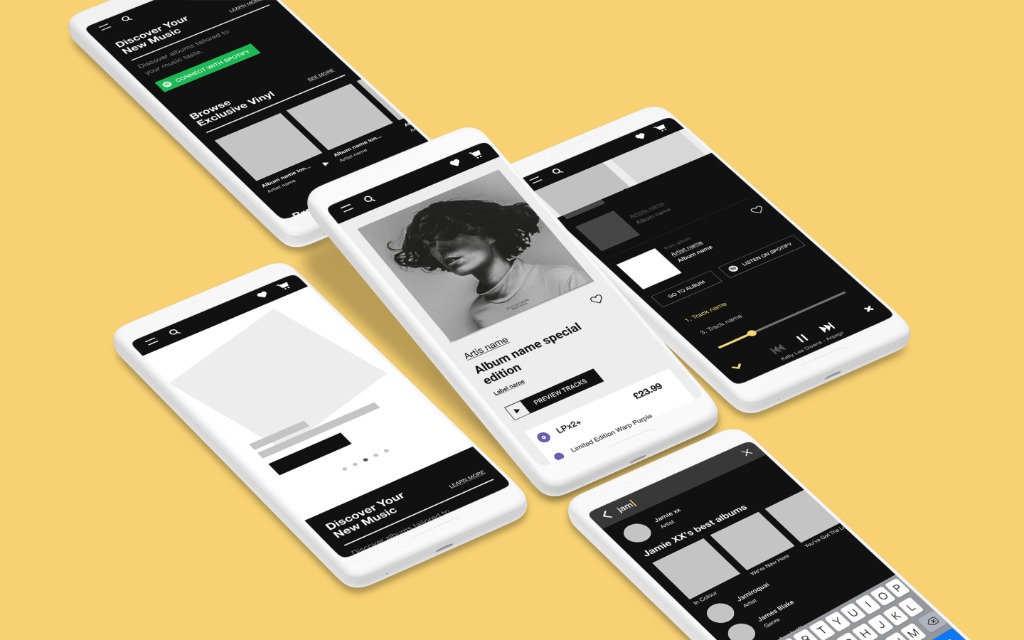
Independent Music Retailer
An indie-music legend — e-commerce redesign
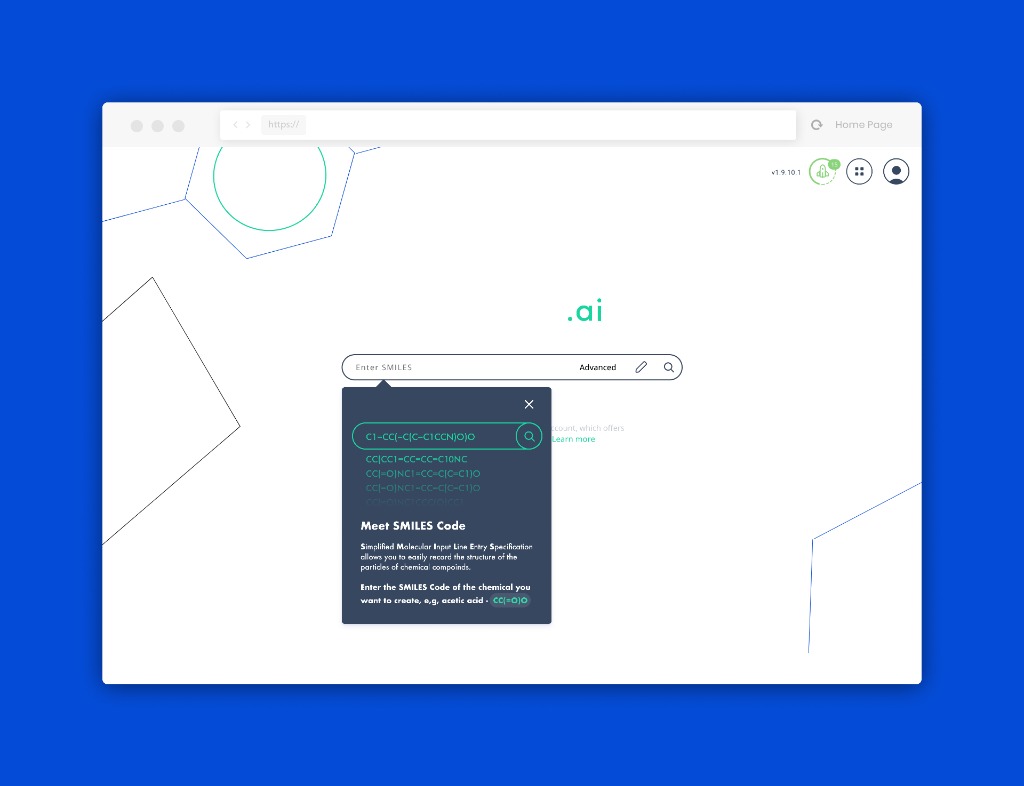
AI for the chemical industry
A SaaS platform supporting chemical retrosynthesis planning.
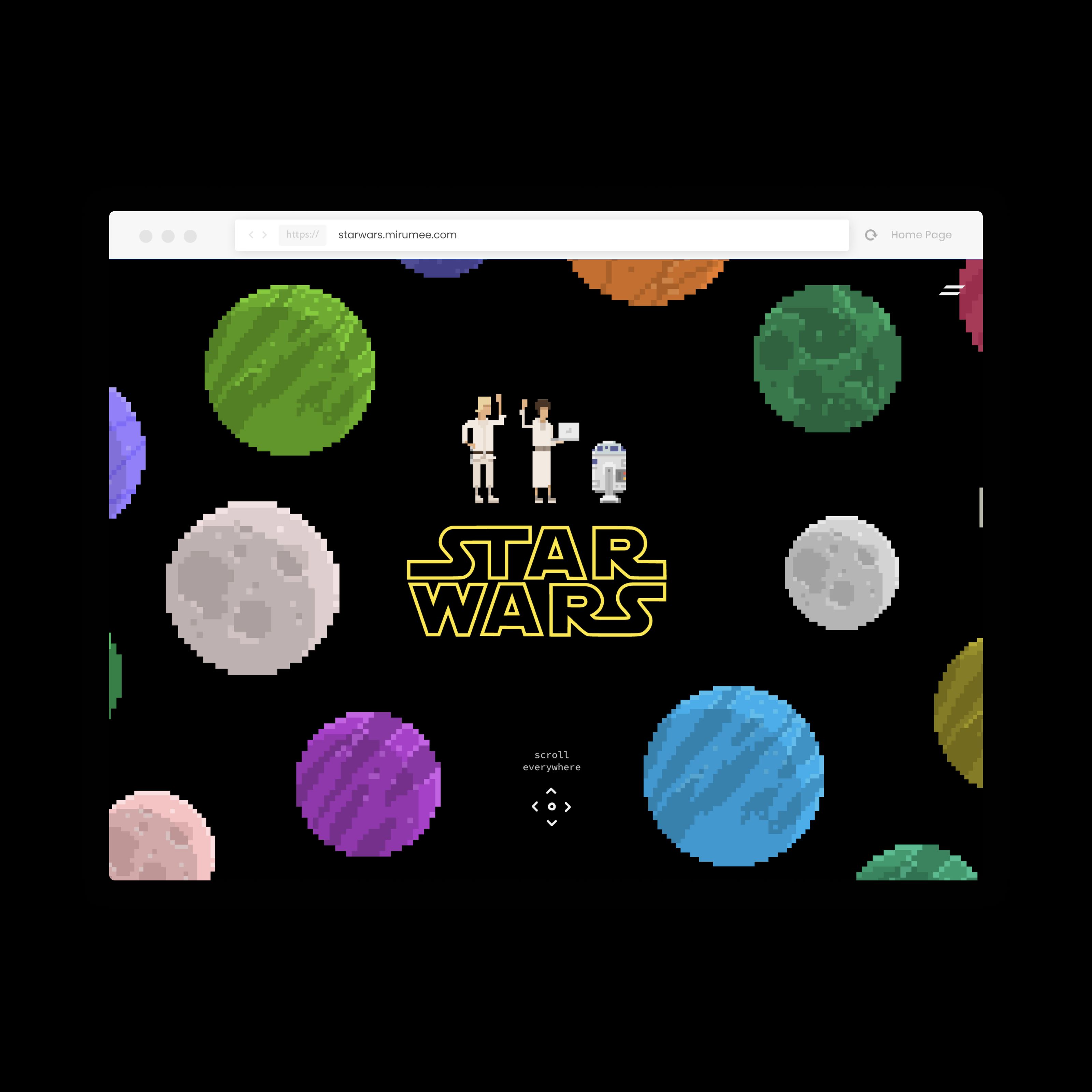
An inspiration-driven design system
A front-end recruitment task set in a sci-fi world.
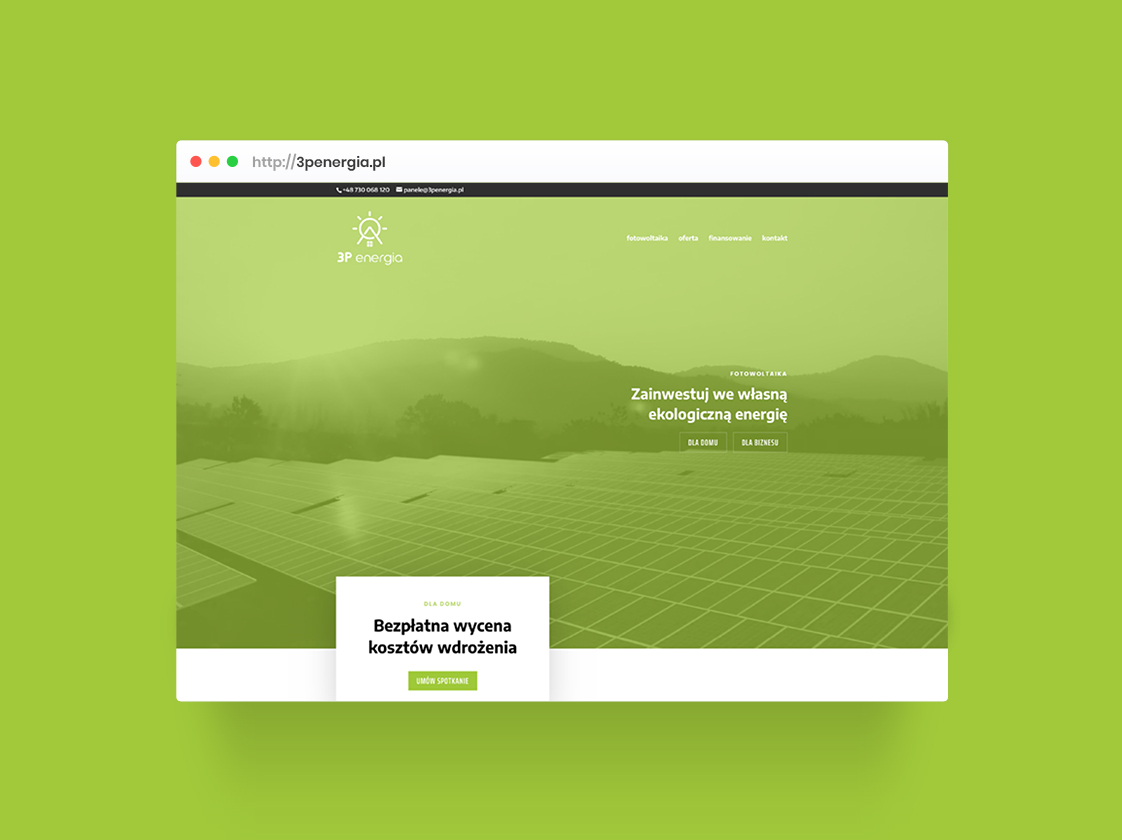
3P Energia
Comprehensive photovoltaic solutions for homes and businesses
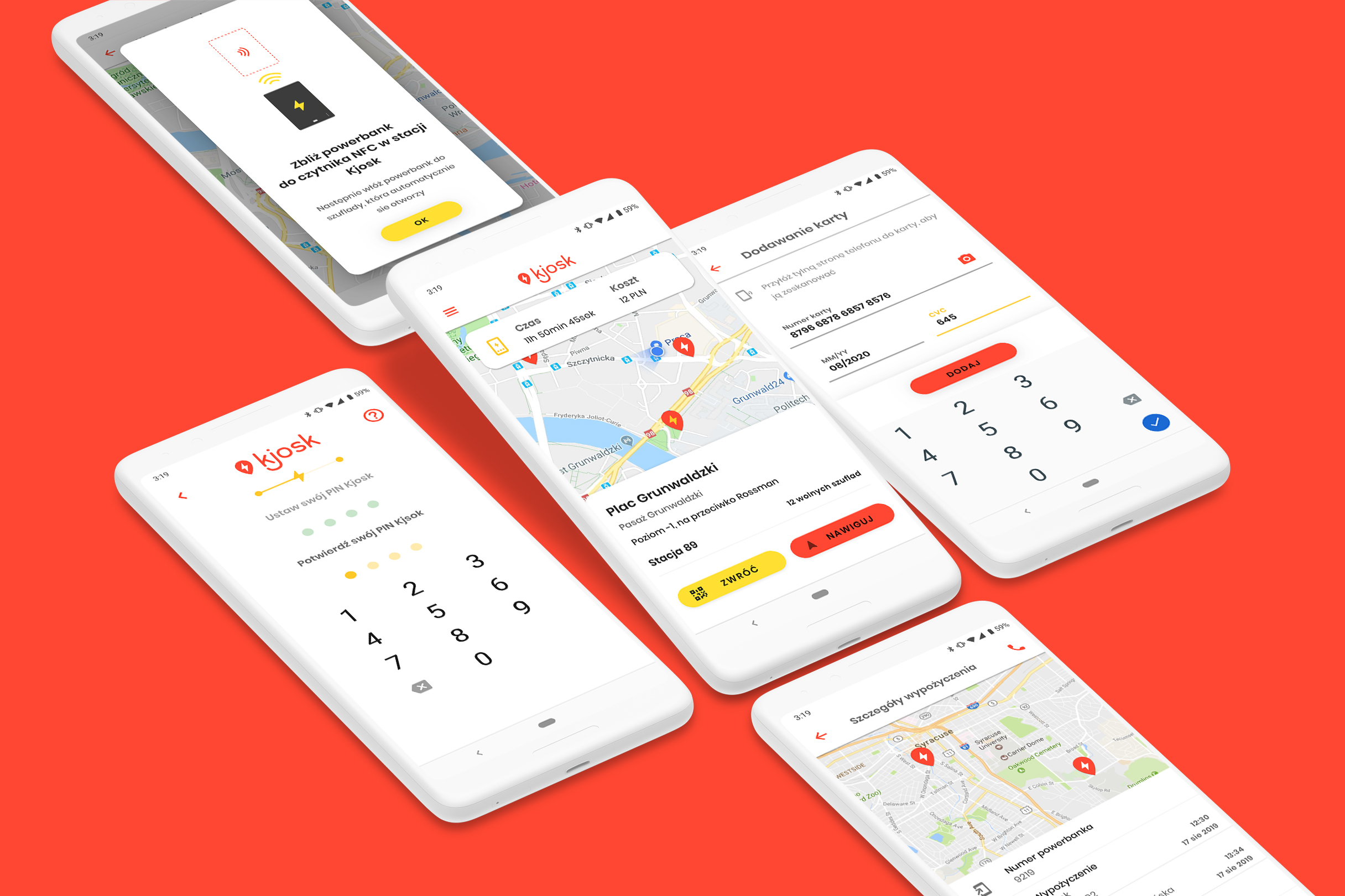
Kjosk
UX/UI Design: a power-bank rental app
.jpeg)
Meble Jurek
Furniture manufacturer with 25 years of experience
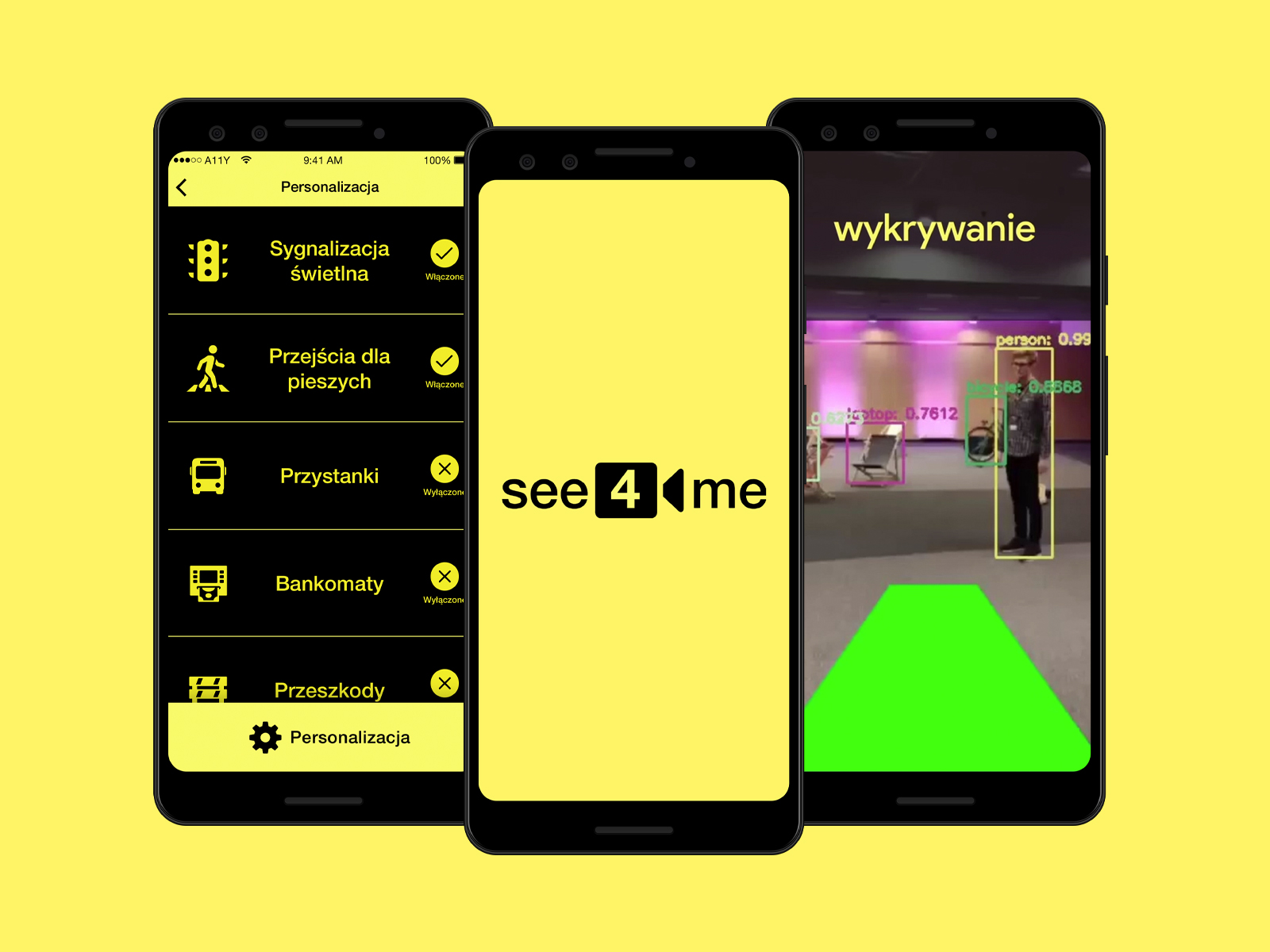
see4me
AR navigation helping blind people (Hackathon+)
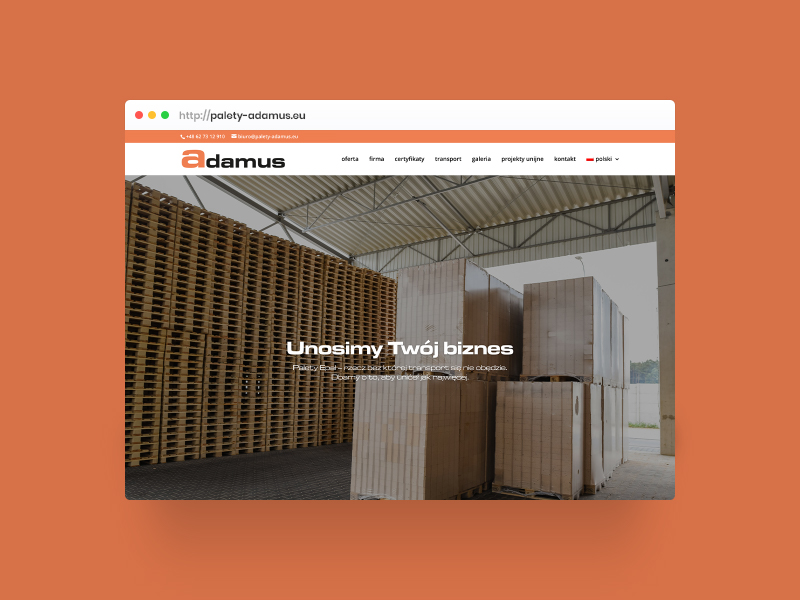
Adamus
EPAL pallet manufacturer with 30 years of experience
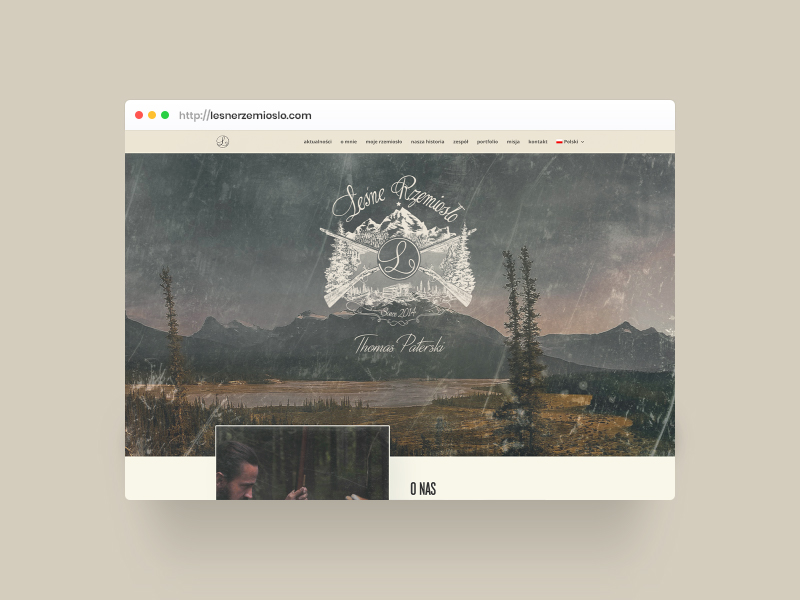
Leśne Rzemiosło
Website for a bushcraft project from Canada
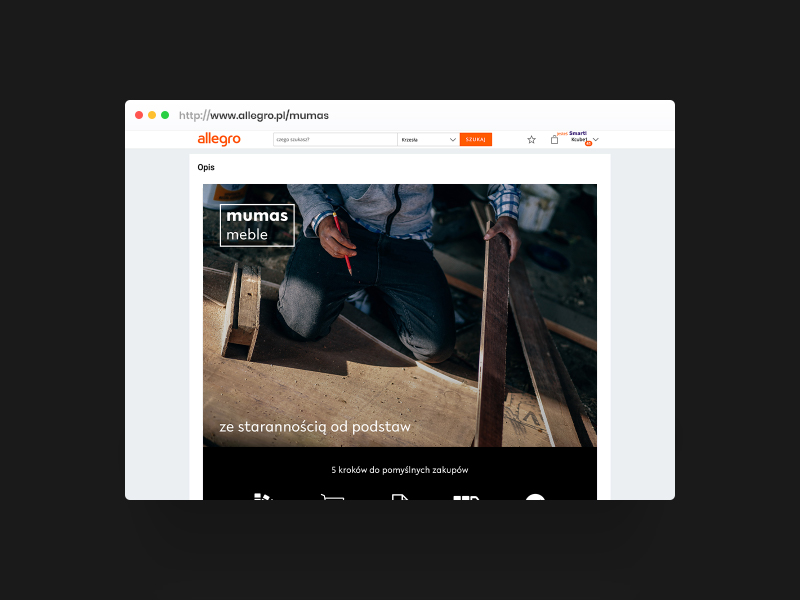
mumas
Logo and Allegro template for an online furniture store
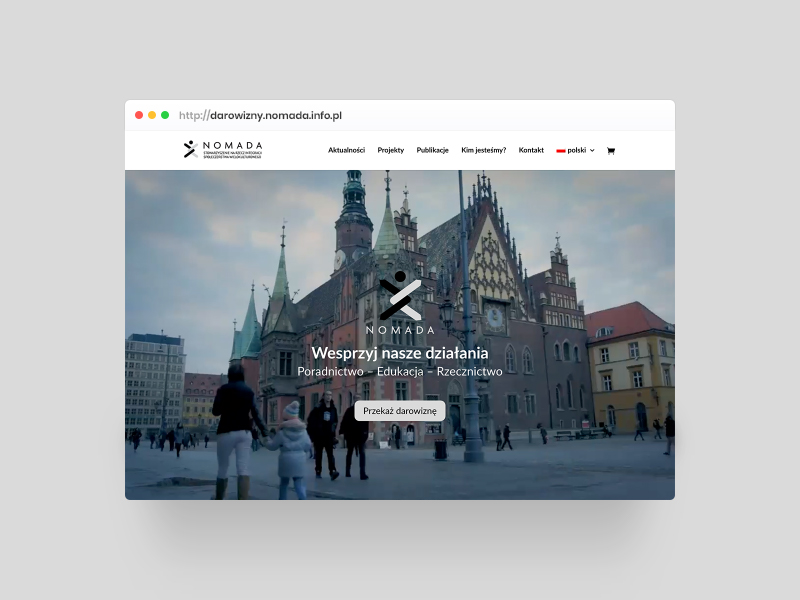
Nomada
Fundraising website for a human-rights association
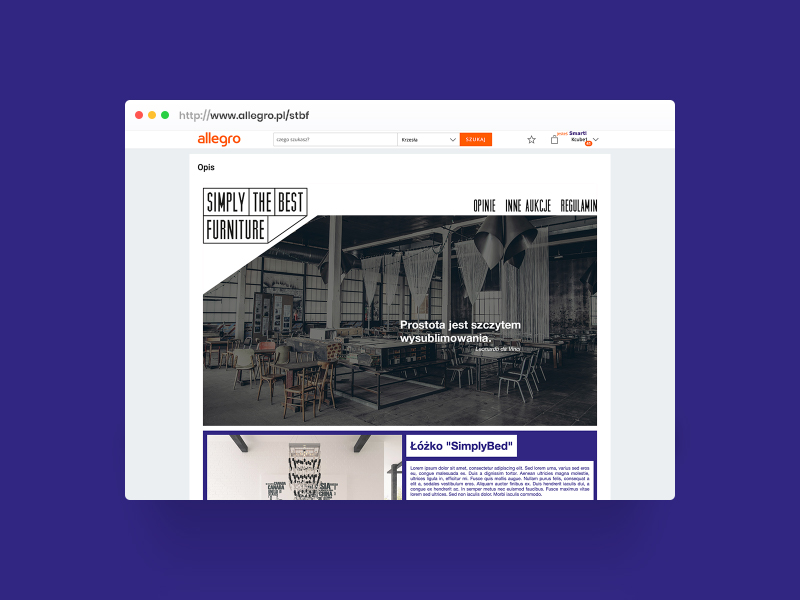
STBF
Visual identity for a furniture brand
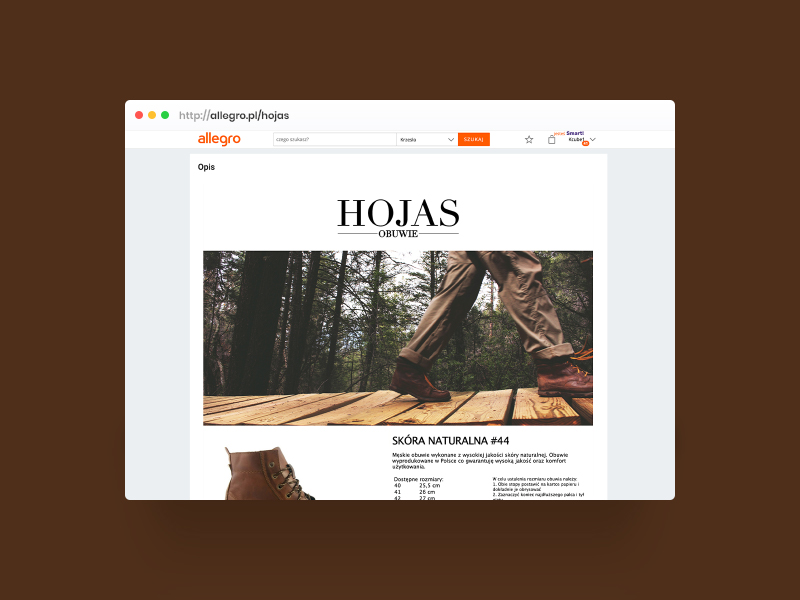
Hojas obuwie
Visual identity for a two-generation footwear business
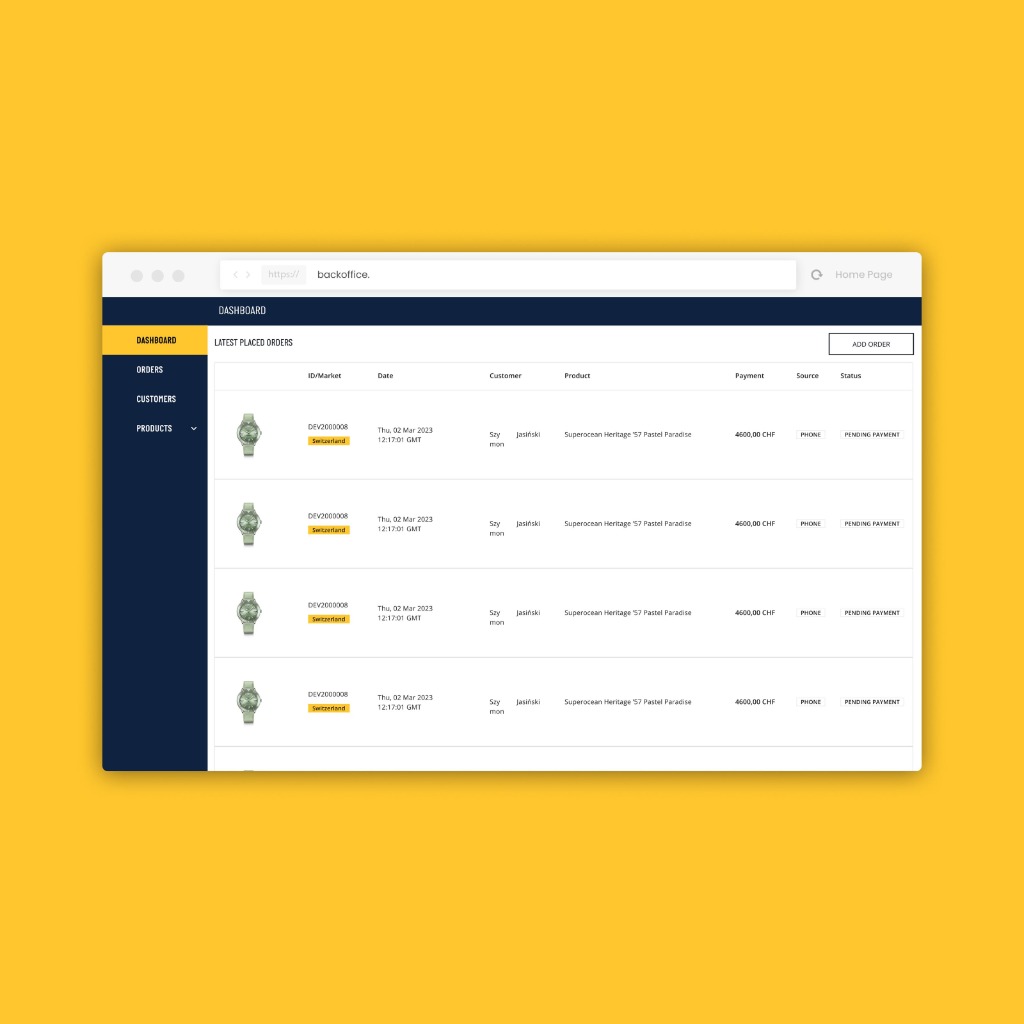
Luxury Watch E-Commerce
dashboard and mechanisms
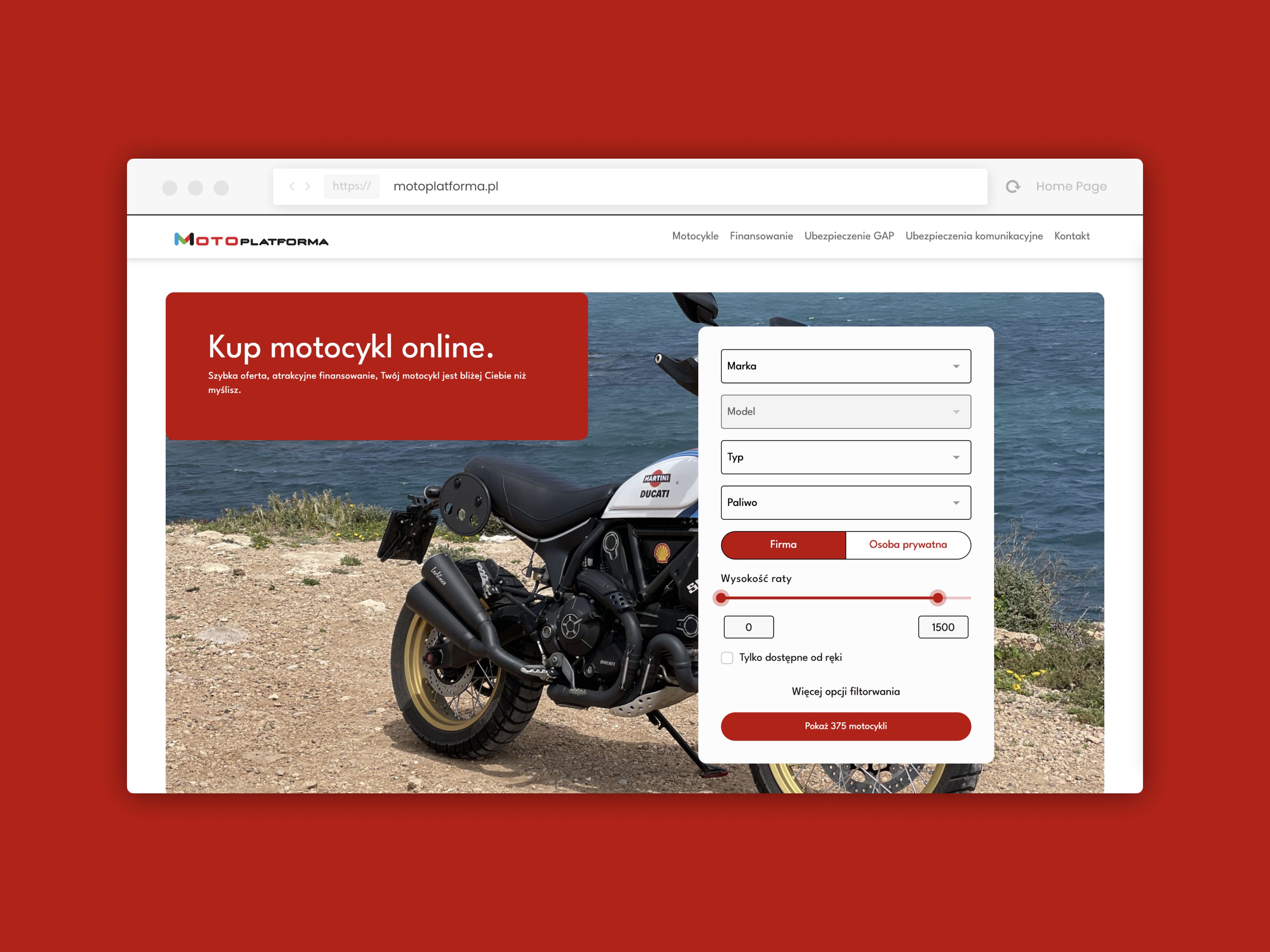
Motoplatforma
Multi-brand motorcycle showroom and online financing system
Global Pharma Ecosystem
A set of 3 med-tech apps — protected access
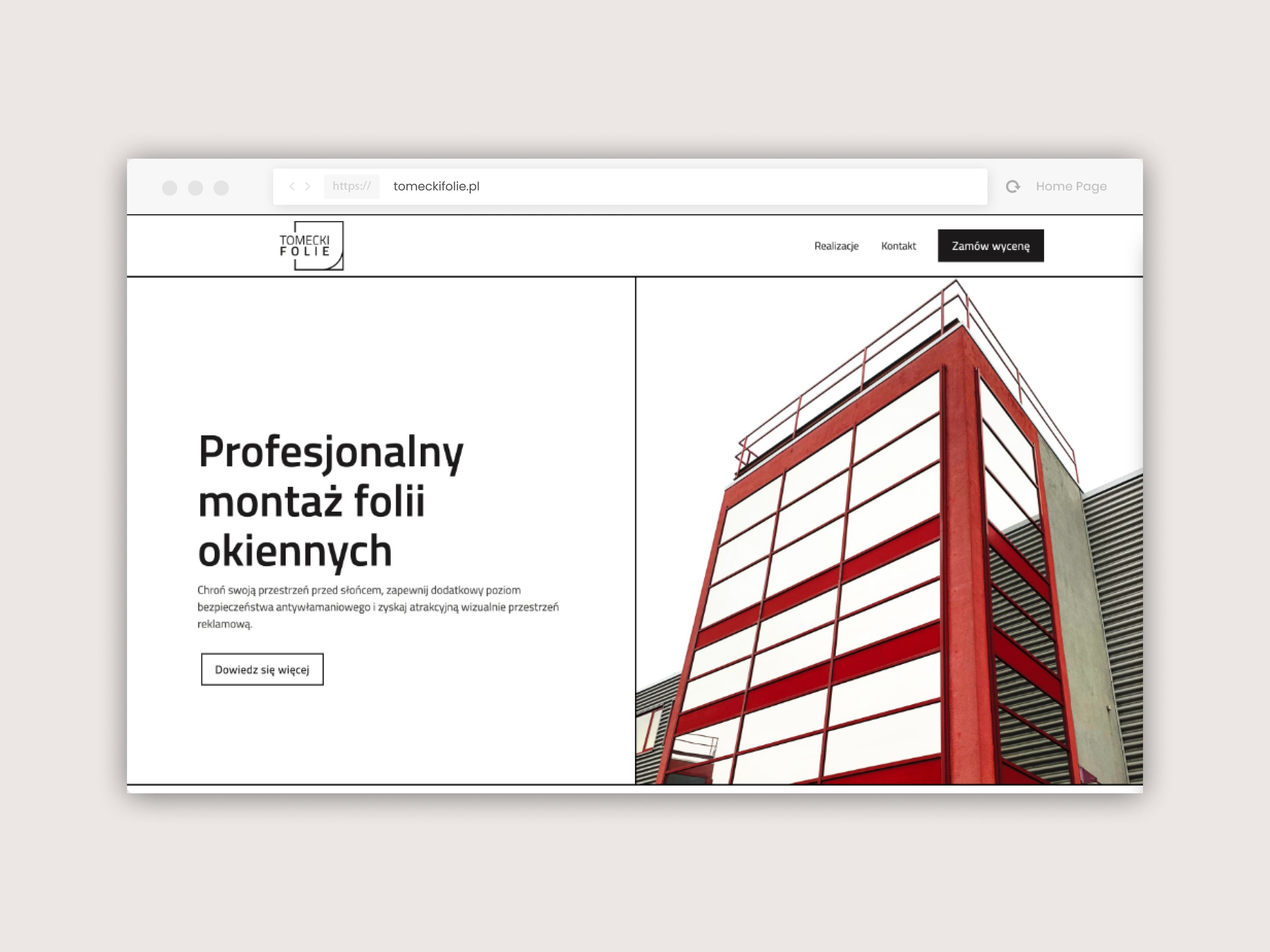
Tomecki Folie
Brand website and lead-gen ecosystem built in Webflow
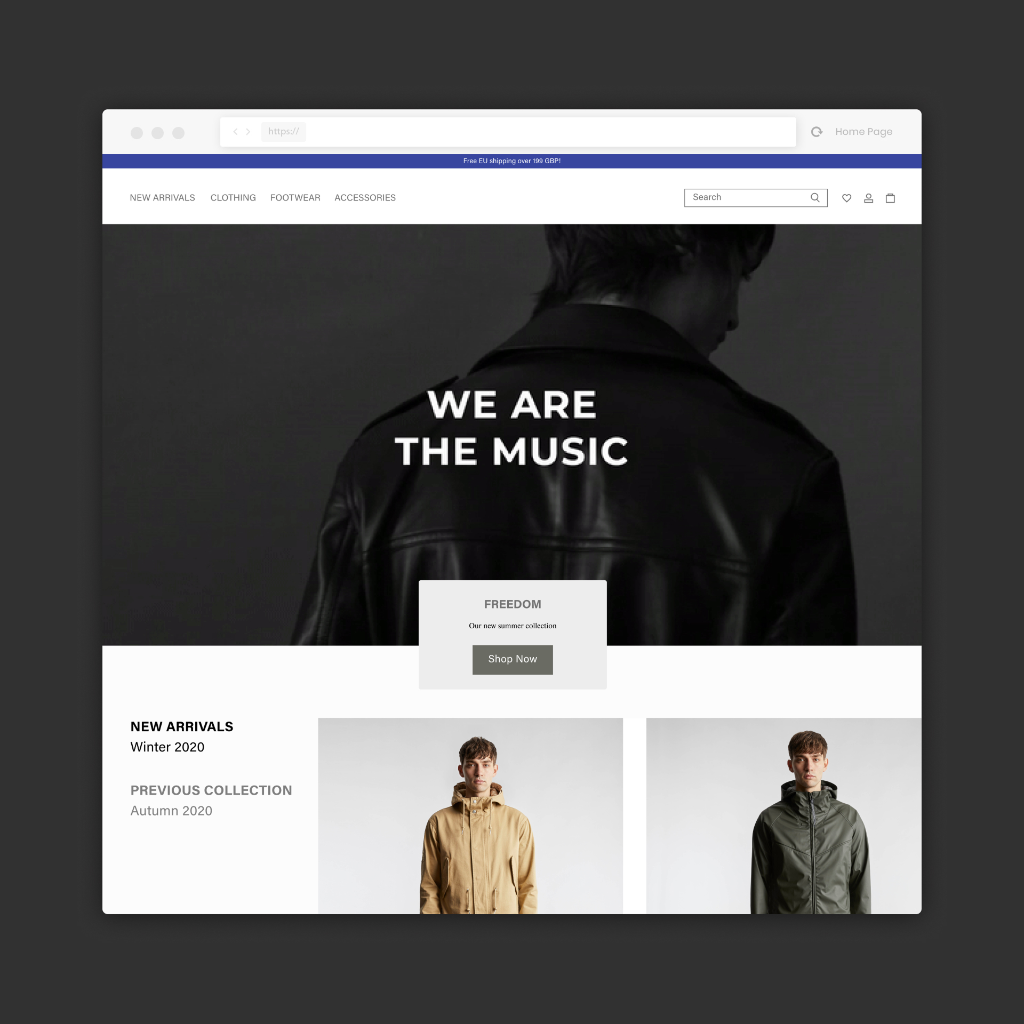
British Fashion E-Commerce
Premium brand homepage — access after LinkedIn verification
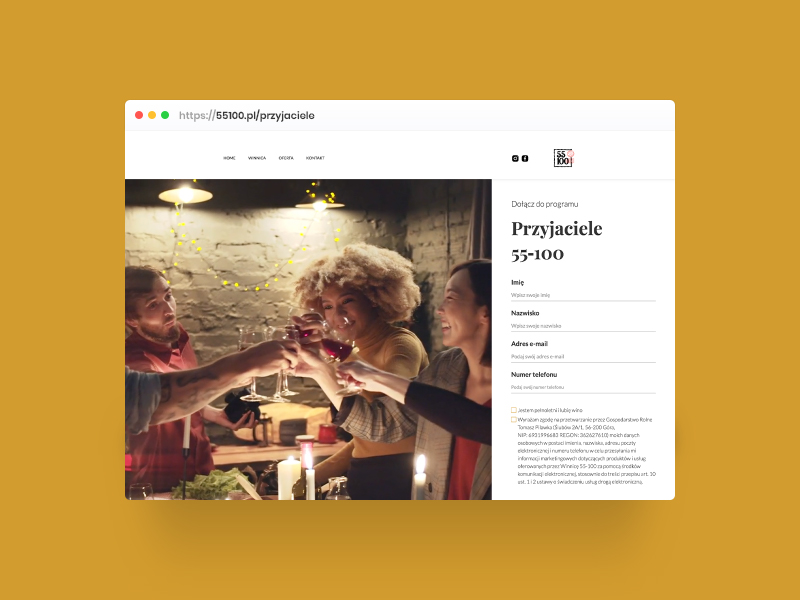
Przyjaciele 55-100
Digital loyalty program for a microclimate vineyard
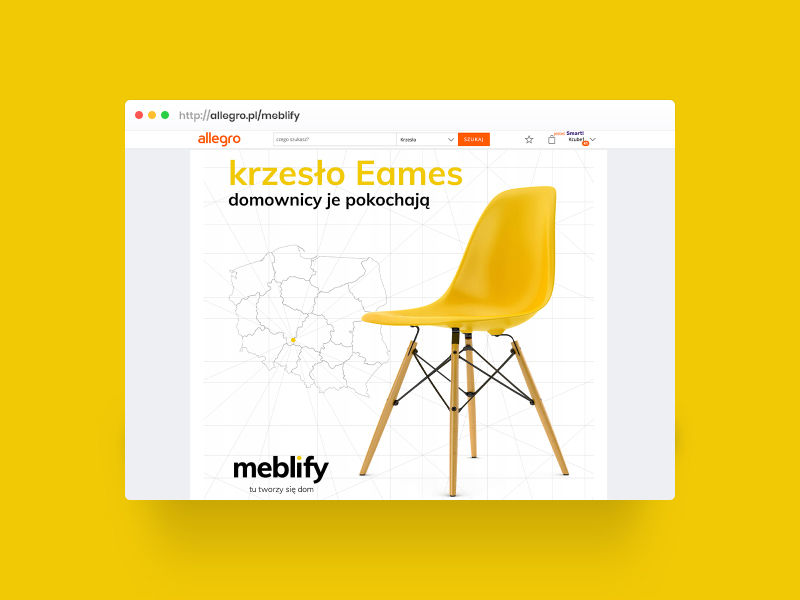
Meblify
Rebranding a Polish online store for Allegro × D2C
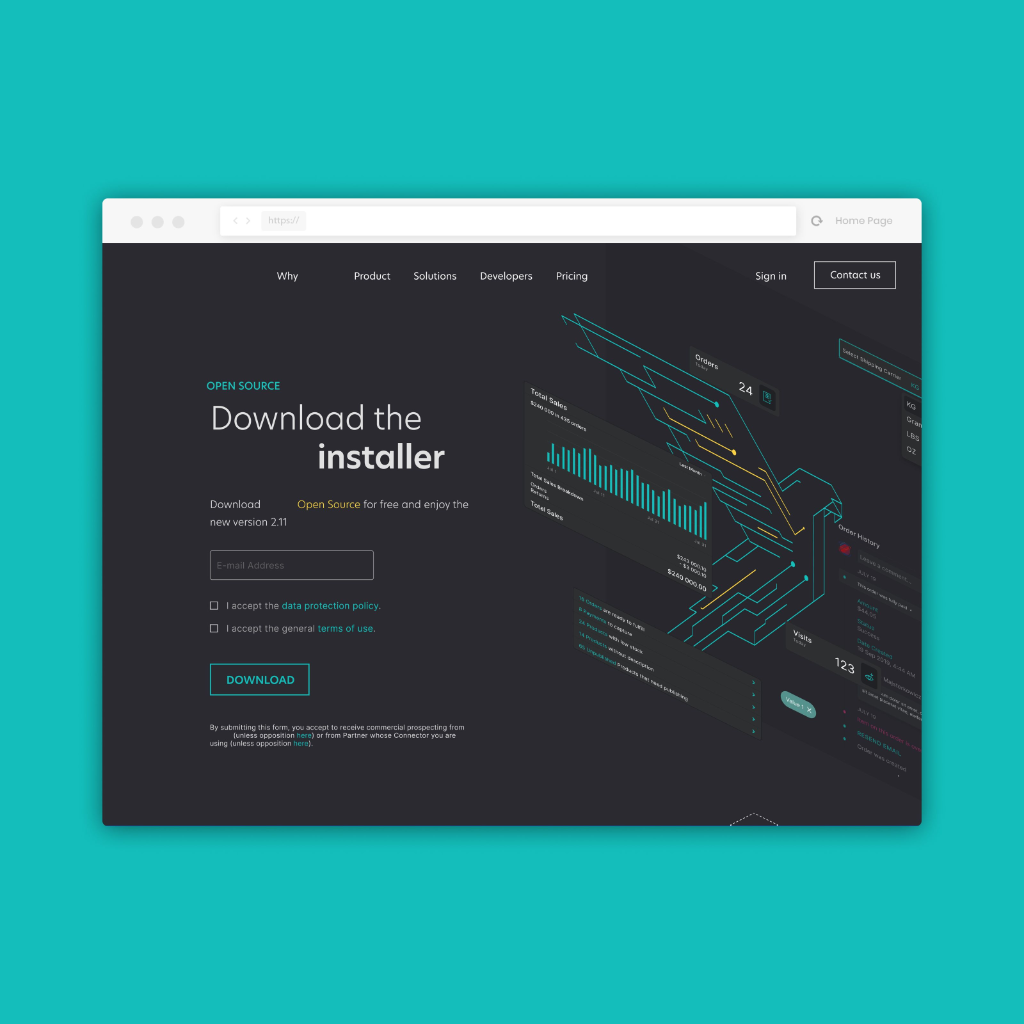
Open-source E-Commerce Ecosystem
Installer, swag store and recruitment platform
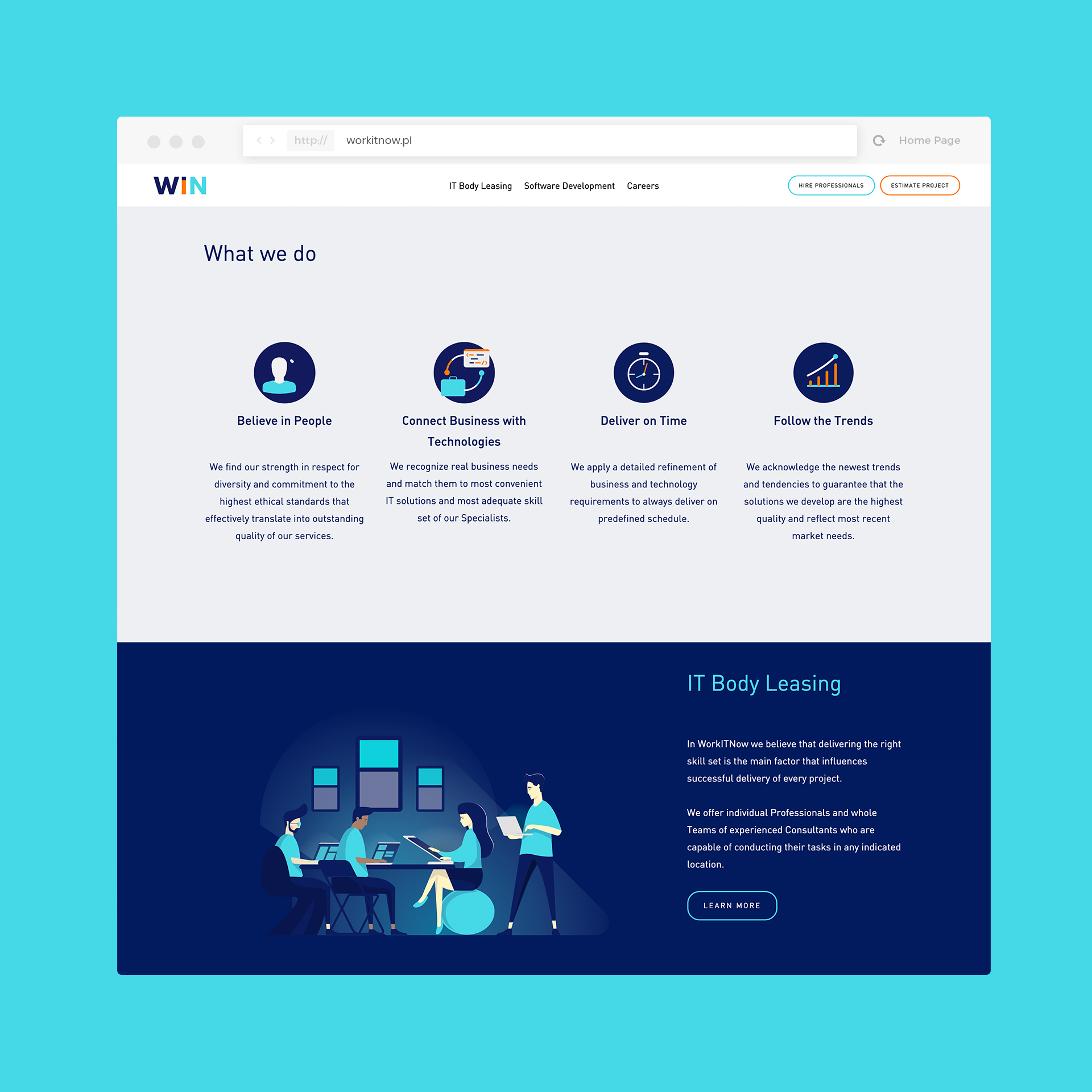
WORKITNOW
Brand website with a recruitment system for an IT company